Empires in the Shadows: Tax Havens & Trusts
Understanding the sophisticated mechanisms used by the ultra-wealthy to navigate global tax landscapes and protect generational wealth.
In the high-stakes world of global finance, preserving wealth is often as complex as generating it. For the global elite, **Tax Havens** and **Offshore Trusts** represent more than just tax savings; they are tools for legal defense, financial privacy, and institutional stability.
A tax haven is a jurisdiction that offers foreign individuals and businesses little or no tax liability in a politically and economically stable environment. By utilizing these territories—such as the Cayman Islands, the British Virgin Islands, or Panama—the wealthy can legally decouple their assets from the high-tax environments of their home countries.
“Capital is like water; it naturally flows to the path of least resistance. In the financial world, that path is paved with zero-tax jurisdictions and impenetrable privacy laws.”
ON CAPITAL FLIGHTI. The Mechanics of Preservation
Why do the wealthy favor these structures? The answer lies in the **Compound Advantage**. By funneling investments through offshore mutual funds or trusts, investors can avoid the “tax drag” that typically eats into annual returns. Without immediate capital gains or dividend taxes, the full power of interest can work uninterrupted.
Beyond tax efficiency, these structures provide **Asset Protection**. In many offshore jurisdictions, the legal barriers to seizing assets are significantly higher than in the U.S. or Europe. This creates a “legal moat” that protects a family’s fortune from future litigations, political instability, or aggressive creditors in their native country.
II. The Panama Papers Inflection
The veil of secrecy was famously pierced in 2016 with the publication of the **Panama Papers**. This massive leak from the law firm Mossack Fonseca exposed the inner workings of shell companies and offshore accounts used by world leaders, celebrities, and billionaires.
The leak revealed that while many of these structures were technically legal, they were frequently used to obscure the “Ultimate Beneficial Owner” (UBO). The fallout was global, leading to the resignation of prime ministers and a massive international push for financial transparency. It served as a reminder that in the digital age, absolute secrecy is a diminishing commodity.
“The Panama Papers didn’t just expose individuals; they exposed a parallel financial system that operates beyond the reach of national borders.”
THE TRANSPARENCY SHIFTIII. The New Era: Compliance & CRS
Today, the offshore world is undergoing a transformation. The introduction of the **Common Reporting Standard (CRS)** by the OECD has made the automatic exchange of financial information between countries a reality. The “Wild West” of hidden accounts is being replaced by a highly regulated system of tax optimization.
The modern magnate no longer seeks to *hide* their wealth, but rather to *structure* it within the bounds of international law. The goal remains the same—protection and growth—but the methods have evolved from shadow accounts to transparent, sophisticated global trusts.
Offshore finance is no longer about the shadows; it is about navigating a globalized world where the smartest move is not to evade, but to expertly optimize.
 The Billionaire Blitz: 10 Ruthless Moves That Turned Moments Into Billions
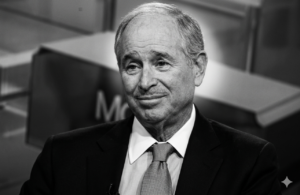 Stephen Schwarzman: The Empire of Blackstone