Paris, 16ème · The Maestro of the Carousel
The Mathematics of a Ghost Market
In the gilded salons of the 16th arrondissement of Paris, power doesn’t always speak in loud commands. Often, it whispers in the clinking of crystal glasses and the silent transfer of digital assets. For years, the undisputed maestro of this world was Arnaud Mimran — a man who didn’t just inhabit the upper echelons of society; he engineered them.
The foundation of Mimran’s legend rests on a concept that sounds almost virtuous: Carbon Credits. In an era obsessed with environmental stewardship, the European Union created a market for clean air. It was a noble pursuit — but Mimran didn’t see a planet to be saved. He saw a structural flaw in the tax code.
“He didn’t rob a bank. He became the bank’s shadow. He didn’t subvert the government — he subsidized its leaders until the line between ‘supporter’ and ‘partner’ evaporated.”
Dark Money AnalysisThe strategy was a masterclass in high-frequency arbitrage. By acquiring digital credits in jurisdictions where VAT was not applied and instantly offloading them in markets where it was, Mimran harvested a 19.6% margin on every single transaction. In the world of finance, a 20% guaranteed return is a miracle. In Mimran’s world, it was a daily occurrence.
The Carbon Carousel exploited the split-second latency between European tax departments. Money spun in circles faster than regulators could track, leaving behind a trail of phantom revenue. Mimran wasn’t producing a product — he was living in the gap where the state’s left hand didn’t know what the right hand was doing.
The Social Currency
A man with that kind of liquidity requires a different kind of protection: social and political capital. Mimran understood that in the highest circles, money is only the entry fee. Influence is the real currency. His luxury Paris apartment became a crossroads for the influential — most notably Benjamin Netanyahu during his years in the political wilderness.
The relationship was built on the hospitality of the elite: Alpine ski trips, stays in exclusive coastal enclaves, and significant contributions to public activity funds. In the language of the elite, these aren’t transactions — they are gestures of friendship. But in the cold light of geopolitical scrutiny, they represent the blurring of lines between private wealth and public duty.
Mimran made himself a necessary friend — the kind of man whose invitations you don’t decline because his network is too vast to be ignored. He wasn’t just buying access; he was weaving himself into the fabric of the state itself.
The Permanent Exits
Every empire built on a structural glitch eventually faces a correction. As the French authorities began to peer into the Carbon Carousel, the atmosphere around Mimran shifted from celebratory to claustrophobic. Men who had been his closest collaborators began to disappear from the boardroom and the social scene — permanent exits, abrupt conclusions to long-standing partnerships that left the Parisian elite in quiet panic.
The narrative surrounding Mimran took on a darker, more cinematic hue. There were unexplained incidents involving family members and business rivals — discussed in hushed tones as unfortunate liabilities or security complications. Mimran’s world had become a house of cards where the wind was picking up, and the stakes had moved from the balance sheet to the very survival of his legacy.
The Kinetic Collapse
The true tension of the Mimran story lies in the transition from white-collar brilliance to kinetic outcomes. He was eventually linked to the forced detention of a Swiss financier — described by his legal team as a dispute over asset recovery, but viewed by the state as something far more coercive.
It was the moment the mask of the refined socialite slipped. The man who hosted Pharrell Williams and dined with prime ministers was suddenly caught in the gears of a legal system that no longer found his arbitrage clever. The French state eventually labeled the carbon scheme “The Swindle of the Century” — they didn’t just want the money back; they wanted to dismantle the myth of the untouchable financier.
“The void he created in the French treasury was eventually filled — but the questions he raised about the price of political friendship remain unanswered.”
Dark Money Analysis
Arnaud Mimran represents a specific archetype of the 21st century: the man who realizes that the global financial system is actually a collection of poorly connected databases. His wealth was a masterpiece of subtraction — taking from the public purse through digital credits and reinvesting that harvest into the highest levels of political power.
Mimran didn’t just play the game. He exploited the software it ran on.
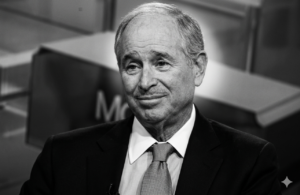 Stephen Schwarzman: The Empire of Blackstone
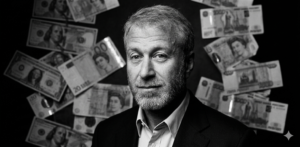 the Quiet Power of Roman Abramovich