Iron and Steam: The Vanderbilt Legacy
From a single ferry boat to the world’s greatest transportation monopoly, the story of the family that defined American wealth and architectural excess.
Few names resonate with the sheer weight of the American Gilded Age like **Vanderbilt**. The dynasty was forged by **Cornelius “The Commodore” Vanderbilt**, a man of fierce competitive drive who transformed a modest steamship business into a railroad empire that connected the burgeoning American continent.
His wealth was not just immense; it was foundational. By consolidating the New York Central Railroad, Vanderbilt created a logistical artery that powered the Industrial Revolution. At the time of his death in 1877, his fortune was estimated to be greater than the entire United States Treasury—a concentration of capital that the world had rarely seen.
“I have been insane on the subject of moneymaking all my life. I have no time to be a gentleman.”
CORNELIUS VANDERBILTI. The Architect of Monopoly
The Commodore was a ruthless disruptor. He understood that in a developing nation, he who controlled the movement of goods controlled the economy. He waged “rate wars” to crush competitors and bought out rivals with cold, calculated precision. His legacy was one of efficiency and dominance, proving that the scale of a single family’s ambition could reshape a nation’s geography.
His son, **William Henry Vanderbilt**, doubled the family fortune, proving that the Vanderbilt touch was not a one-generation fluke. Under his stewardship, the New York Central became one of the most profitable enterprises in history, fueling a lifestyle of unprecedented luxury that would define the era.
II. The Palaces of New York and Newport
If Cornelius built the fortune with iron and steam, his descendants spent it on limestone and gold. The late 19th century saw the Vanderbilts engage in an architectural arms race. From the “Vanderbilt Row” mansions on Fifth Avenue to the “Breakers” in Newport, the family’s homes were intended to rival the palaces of European royalty.
The pinnacle of this excess was **Biltmore Estate** in North Carolina. Built by George Washington Vanderbilt II, it remains the largest privately-owned house in the United States—a 250-room chateau that stands as a monument to a time when wealth knew no boundaries and private interest was synonymous with grand vision.
“The Vanderbilts moved America from a collection of rural outposts to a unified industrial powerhouse, decorating their path with the grandest monuments ever built by a private hand.”
DYNASTIC CHRONICLESIII. The Price of Excess
The Vanderbilt story is also a cautionary tale of the “Third Generation Curse.” While the fortune was colossal, the lack of a centralized trust and the astronomical spending of heirs eventually led to the dilution of the family’s power. Within 50 years of the Commodore’s death, the mansions were being sold and the direct influence over the railroads had waned.
However, the Vanderbilt name survives through philanthropy and cultural institutions like **Vanderbilt University** and Grand Central Terminal. They transitioned from industrial titans to social fixtures, leaving an indelible mark on American history that transcends their bank accounts.
The Vanderbilts taught the world that it is possible to build an empire out of thin air and steam, but maintaining it requires a discipline that gold alone cannot provide.
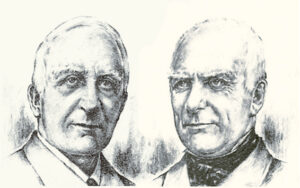 The Catholic Fast-Fashion Trust -Brenninkmeijer family
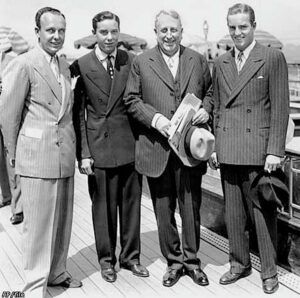 The Yellow Empire – Hearst family