The Nicotine Sovereign: J.B. Duke
How “Buck” Duke weaponized the machine age to engineer global addiction and fund the intellectual foundations of the American South.
James Buchanan “Buck” Duke was the ultimate disruptor of the 19th century. While his contemporaries were focused on steel and oil, Duke looked at the humble tobacco leaf and saw a commodity ripe for industrialization. He didn’t just sell tobacco; he sold the **Mechanized Habit**. By licensing the Bonsack cigarette-rolling machine in 1884—which could roll 200 cigarettes a minute when workers could only roll four—he created a supply that far outstripped demand.
His wealth was a product of **Market Domination**. Duke didn’t wait for a market to exist; he manufactured it through the first truly modern advertising campaigns and a ruthless consolidation of rivals into the American Tobacco Company. By 1890, he controlled 90% of the U.S. market, creating a sovereign-like monopoly that eventually forced the Supreme Court to intervene.
“Duke understood that the machine was not just a tool for production, but a tool for social engineering. He flooded the world with cigarettes until the habit became an instinct.”
ON MASS CONSUMPTIONI. The Bonsack Monopoly
The core of Duke’s empire was an early-stage tech bet. By securing an exclusive contract for the Bonsack machine, he slashed production costs to the bone. With the excess capital, he launched an aggressive global expansion, creating the British-American Tobacco Company. This was the blueprint for the modern multinational corporation: centralized production, global distribution, and a brand that transcended borders.
Even when the Sherman Antitrust Act broke his tobacco monopoly in 1911, Duke proved his versatility. He didn’t fade away; he pivoted to power—literally. He founded the Southern Power Company, now known as Duke Energy, realizing that the same industrial South he had built through tobacco now required the electricity he could provide.
II. The Duke Endowment
In 1924, Duke transformed his industrial capital into **Cultural Capital**. He established the Duke Endowment with $40 million (later significantly increased), a move that reshaped the educational and medical landscape of North and South Carolina. Trinity College was renamed Duke University, and the magnate’s name transitioned from a symbol of a ruthless trust to a hallmark of academic prestige.
This was the “Gilded Age Pivot”—the process of laundering a controversial fortune into a permanent legacy through philanthropy. Like the Nizam of Hyderabad, Duke recognized that the survival of a name requires it to be attached to the public good, transforming a commodity empire into a social institution.
“He conquered the lungs of the nation to build the minds of the South. His wealth was a cycle of consumption transformed into a monument of education.”
THE LEGACY ARBITRAGEIII. The Gilded Ghost
Duke lived in the grand style of the American elite, commissioning the “Duke Farms” estate and a magnificent mansion on Fifth Avenue. Yet, his true power remained in the infrastructure he left behind. The electricity that powers the Carolinas and the surgeons trained at Duke University are the modern iterations of his steel and tobacco profits.
His story is the final word on the American Dream of the 1900s: raw ambition fueled by technological advantage, refined by legal warfare, and finally solidified through the creation of enduring institutions.
James Buchanan Duke proved that monopolizing a market is merely the first step; the true achievement is monopolizing the history that follows it.
 How Dan Gertler turned a diamond dynasty into a sovereign empir?
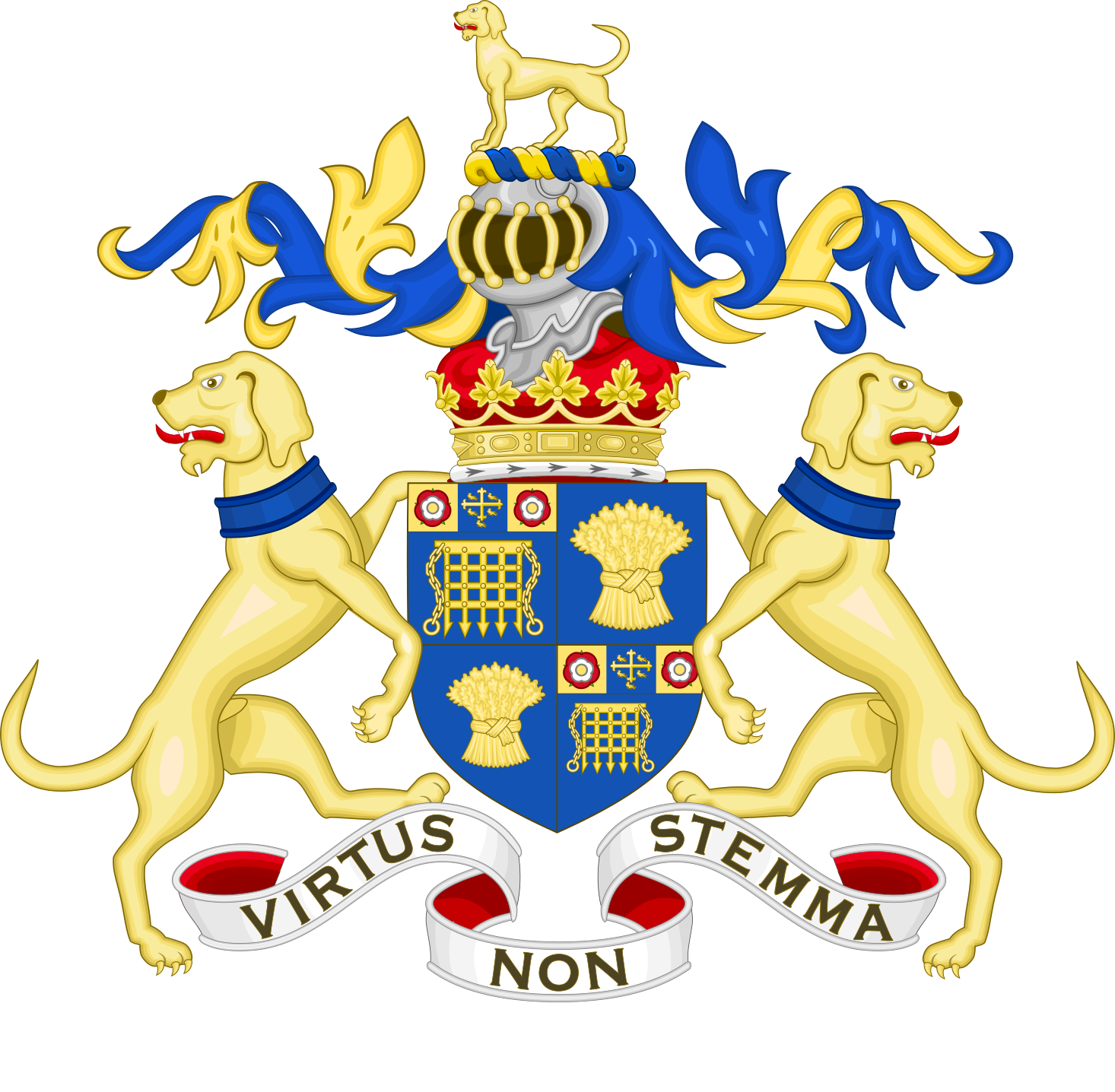 The Property Dukes And The Grosvenor Line