Mombasa, Kenya · The Boss
The Precision of a Marksman
In the humid, salty air of Mombasa, where the Indian Ocean meets the African continent, there is a rhythm to the movement of steel. Thousands of shipping containers swing from cranes every day, carrying the lifeblood of East Africa’s economy. To the casual observer, it’s just commerce. But to those who study the architecture of power, the port is a chessboard. And for decades, the most formidable player on that board was a man named John Harun Mwau.
Before the billions and the political titles, Mwau was a policeman — but not just any policeman. He was a world-class sharpshooter who represented Kenya in the 1968 and 1972 Olympics. This isn’t a minor detail in his biography; it is the key to his entire business philosophy. A sniper operates on patience, calculation, and the ability to see things from a distance that others miss.
“He didn’t just buy shops or farms — he looked for the choke points. The places where the system had to pass through. And then he placed himself right in the middle of the gate.”
Dark Money AnalysisThe Architecture of the Grey Economy
By the 1990s and early 2000s, Mwau had realized that the real wealth in a developing nation isn’t in manufacturing — it’s in logistics. He founded Pepe Limited, a private inland container depot. By owning a private terminal, Mwau essentially created a sovereign piece of land where goods could be stored, processed, and moved — a black box operating inside a system already plagued by shadow trade.
We are talking about an individual whose net worth was estimated to flirt with the billion-dollar mark in a country where the average annual income is a fraction of that. He didn’t just make money; he built a parallel infrastructure that operated alongside the state, often proving to be more powerful than the state itself.
A private container terminal is more than a logistics asset — it is a jurisdictional grey zone. In a port environment, controlling the physical movement of containers means controlling what can be verified, what can be delayed, and what can disappear entirely from official records.
The Washington Collision
The turning point in the Mwau legend came in 2011. It is rare for the President of the United States to personally sign a document targeting a single businessman in East Africa — but that is exactly what Barack Obama did. Under the Kingpin Act, the U.S. Treasury officially designated Mwau as a person of interest, freezing his American assets and forbidding any U.S. citizen from doing business with him.
The Americans were specific: they weren’t accusing him of tax evasion or simple corruption. They were accusing him of being the logistical backbone for high-level international unauthorized trade — his influence over the Port of Mombasa seen as a strategic threat to global security.
“They want my businesses. They want to control the gateway to Africa, and I am the only one standing in their way.”
John Harun Mwau — Public Statement, 2011His response was a masterclass in PR and legal defiance. He didn’t hide. He didn’t run. He held press conferences with the confidence of a man who knew exactly where the bodies were buried — turning a criminal investigation into a narrative of colonial interference.
The Political Shield
Mwau understood a fundamental truth about power in Africa: Business is the engine, but Politics is the armor. He served as a Member of Parliament and, most notably, as the Assistant Minister for Transport — the man accused of running illicit logistics was simultaneously helping run the nation’s transport ministry.
He even served, briefly, as the head of the Kenya Anti-Corruption Authority. A man who lived in the greyest areas of the law — tasked to clean it up. These roles built a network of loyalty so deep that in Kenya, if you wanted something moved, something cleared, or something forgotten, all roads eventually led back to The Boss.
The Legacy of the Choke Point
What makes Mwau truly fascinating is his lifestyle. Unlike the new-money tycoons who flaunt gold watches on social media, Mwau remained an enigma — expensive suits, quiet whispers, and massive, invisible transactions. He proved that the most dangerous type of wealth isn’t the kind you see on a Forbes list; it’s the kind that controls the ports, the roads, and the politicians’ campaign funds.
To this day, Mwau remains a free man. Despite the weight of the U.S. government, despite the intelligence dossiers, despite the whispers in the halls of power in Nairobi — he has never been convicted. He built a legal and business maze so complex that even the world’s most powerful intelligence agencies could not find the center of it.
The story of John Harun Mwau is a lesson in how the world actually works. It’s not about who has the most money in the bank — it’s about who controls the flow. He turned a port into a throne, stared down the most powerful nation on earth, and never blinked.
John Harun Mwau didn’t just beat the system. He became the system.
 The Trading Clan And The Chey Dynasty
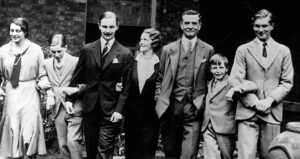 The Landlords of New York — The Astors