
There are billionaires who want to be seen. And then there are those who understand that being seen is a weakness. Roman Abramovich belongs to the second group. At first glance, nothing about him feels overwhelming. No dramatic speeches. No loud personality. No constant presence in the media. He doesn’t try to convince you he’s powerful.
And that is exactly what makes him dangerous. Because power, in its purest form, doesn’t need to explain itself.
A Beginning That Doesn’t Match the Outcome
Abramovich’s story doesn’t begin with privilege. It begins with absence. Orphaned at a young age in the Soviet Union, he grew up without the safety net that most people rely on. No wealthy family. No established connections. Just a system that was collapsing and a society that was about to be reshaped in ways no one fully understood.
The Soviet Union didn’t slowly evolve. It broke. And when systems break, two types of people emerge: those who try to survive within the chaos… and those who learn how to use it. Abramovich didn’t fight the chaos. He adapted to it.
The Real Game Was Never Official
In the early 1990s, Russia wasn’t just transitioning into capitalism. It was improvising it. State‑owned assets were being privatized at a scale never seen before. Oil, metals, infrastructure — entire industries were suddenly available, but not through clean or transparent processes.
It wasn’t about who had the best business plan. It was about who understood the rules… before the rules were written. Abramovich entered this environment quietly. No loud declarations. No aggressive positioning. He moved through it — trading, structuring, aligning himself with people already close to power, including figures like Boris Berezovsky.
He didn’t just survive the birth of Russian capitalism — he positioned himself at its core.
ON ABRAMOVICH’S RISETogether, they navigated deals that would later become controversial, misunderstood, and in many cases, never fully explained. But one thing is clear: Abramovich didn’t just participate in the rise of modern Russian capitalism. He embedded himself inside it.
Oil, Leverage, and Silence
The turning point came with oil. Through a series of acquisitions and political alignments, Abramovich gained control over Sibneft — one of Russia’s major oil companies at the time. Oil isn’t just a commodity. It’s leverage. It’s influence. It’s geopolitical power compressed into barrels. And Abramovich understood that better than most.
While others tried to build visibility, he built control. While others spoke, he listened. While others rushed to expand publicly, he consolidated quietly. Eventually, Sibneft was sold to Gazprom for around $13 billion. That single move transformed him into one of the richest men in the world — but more importantly, it revealed his mindset: he wasn’t attached to assets. He was attached to timing.
For Abramovich, the asset is never the point. The structure, the timing, and the leverage around it — that’s where the real game lives.
The Governor Who Didn’t Need to Be One
At one point, Abramovich became the governor of Chukotka — a remote and harsh region in Russia. On paper, it didn’t make sense. Why would a billionaire choose to govern one of the coldest, most isolated areas in the country?
But again, if you look closer, it reveals a pattern. He invested heavily in the region — infrastructure, schools, housing. He improved living conditions in a place most people would avoid entirely. Was it philanthropy? Was it strategy? Was it both? With Abramovich, you rarely get a clear answer. And that ambiguity is part of his identity.
The Public Mask: Football and Familiarity
To the outside world, Abramovich became widely known through his ownership of Chelsea FC. It was a very different image. Instead of oil deals and political connections, people saw trophies, players, and stadiums. Passion. Competition. Entertainment.
But even here, his behavior remained consistent. He didn’t become a loud owner. He didn’t chase the spotlight. He funded, observed, and made decisions behind the scenes. Chelsea became one of the most successful football clubs in Europe under his ownership. But Abramovich himself remained distant, almost detached — as if the club was a visible layer placed on top of something much deeper and far less visible.
Sanctions, Pressure, and the Test of Real Power
In recent years, Abramovich faced sanctions and global scrutiny due to geopolitical tensions involving Russia. Assets were frozen. Ownerships were questioned. His position in the global system was challenged. And yet, even during that period, he didn’t react publicly in the way most figures would.
No emotional statements. No aggressive defense. Just silence. That silence is not weakness. It’s discipline. Because when you operate at a certain level, reacting emotionally can cost more than losing money.
What Makes Him Different
There are many billionaires. But very few operate like Abramovich. He doesn’t try to be understood. He doesn’t simplify his story for public consumption. He doesn’t offer “lessons” or frameworks. And that forces you to observe instead of being told.
If you study his path carefully, a few patterns emerge: he moves in systems, not moments. He builds relationships, not just assets. He understands timing better than most. And he stays emotionally neutral — because panic, excitement, and ego are liabilities in his world.
He doesn’t sell motivation. He doesn’t explain success. He doesn’t ask to be followed — and that’s exactly why he’s worth studying.
ON MODERN POWERA More Honest Take on Power
Abramovich’s story also forces a more uncomfortable perspective. Not all wealth is built in clean environments. Not all opportunities are equally accessible. Not all systems are fair. He didn’t rise in a stable, predictable market. He rose in one of the most chaotic economic transitions in modern history.
And instead of resisting it, he learned how to operate within it. That doesn’t make the story simple. It makes it real.
Roman Abramovich doesn’t fit the modern image of a billionaire. He doesn’t chase visibility. He doesn’t curate a persona. He reminds us that the highest levels of power often exist where there is the least noise. He’s not hiding — he just never needed to be found.
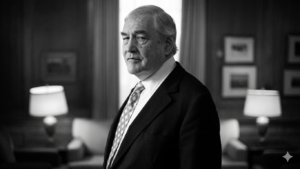 The Grandiose Narrative of Conrad Black
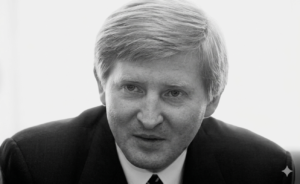 The Iron Sovereign: Rinat Akhmetov